
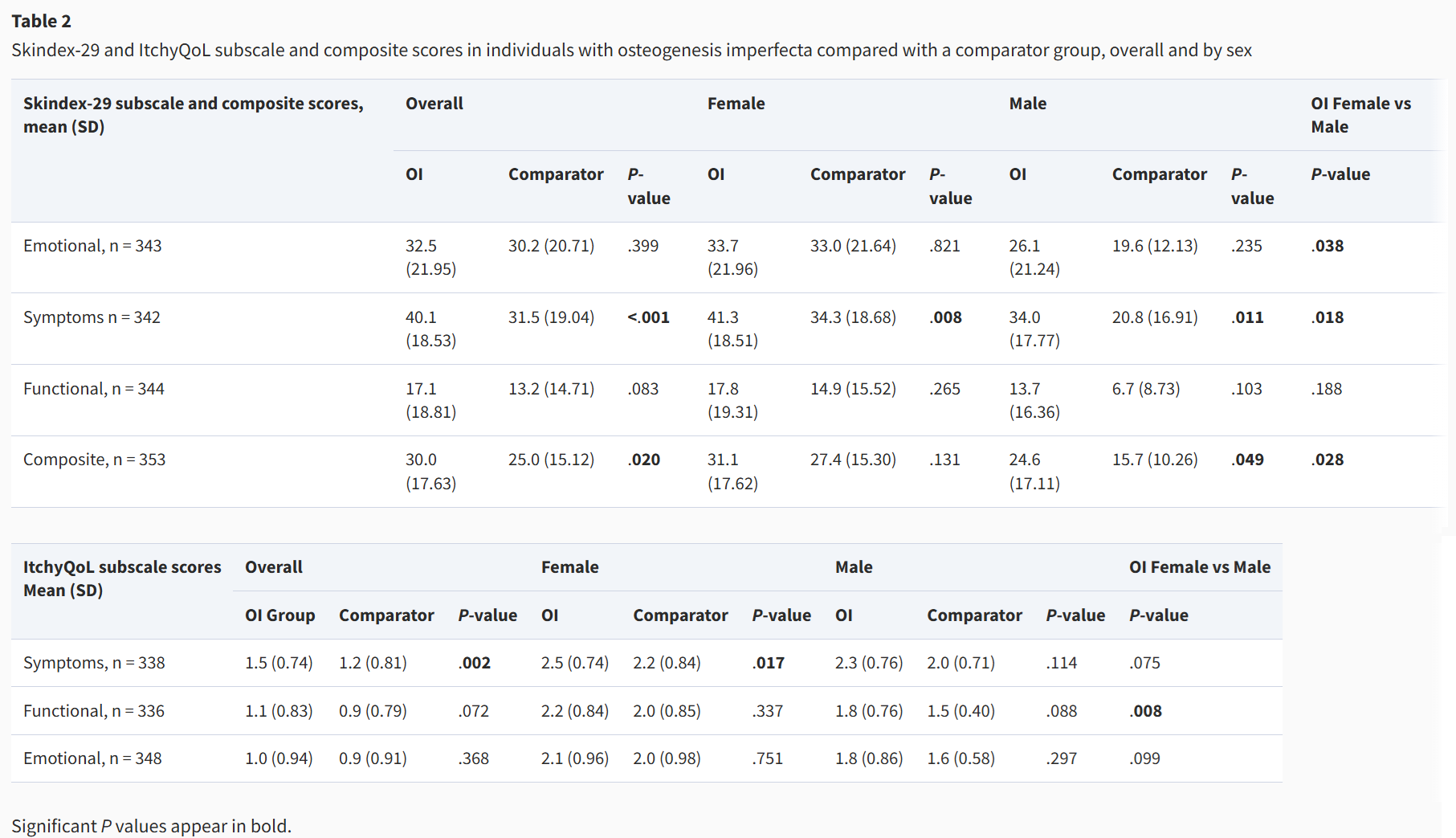
Among men, participants with OI and comparators scored similarly (Table 2). In women, a higher symptomatic score was observed in OI group (2.52 ± 0.74 vs 2.24 ± 0.84, P = .017) while functional and emotional subscales were similar between OI and comparators.
Women with OI reported a higher itch-related burden than men with OI, with a higher functional subscale score (2.16 vs 1.82, P = .008), but similar QOL burden in the symptoms and emotional domains (Table 2).
Mild, moderate, and severe OI
ItchyQoL scores did not differ by self-reported OI severity (mild, moderate, or severe)
Discussion
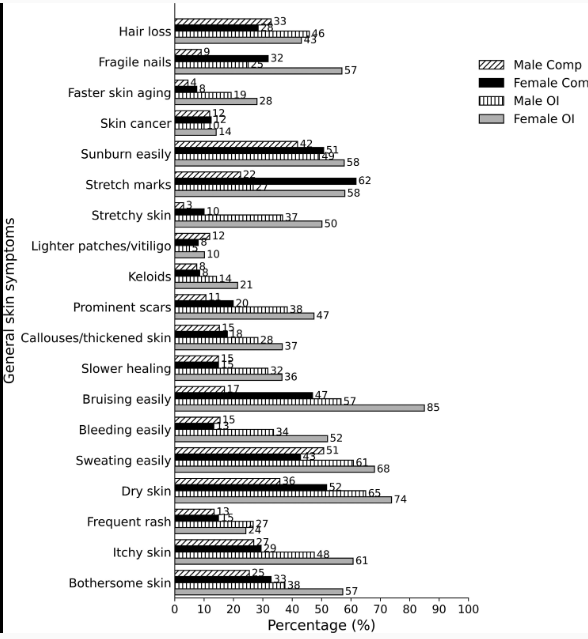
Adults with OI reported substantially higher frequencies of skin symptoms than did the comparator population. Among OI respondents who experienced bothersome skin symptoms, we observed a negative impact on QOL. Collectively, these findings indicate that skin symptoms are common and clinically meaningful in adults with OI and contribute to reduced QOL.
A previous survey-based study of 959 adults with OI examined a range of extra-skeletal manifestations and reported a higher prevalence of dry skin compared with national benchmark datasets, including the National Health Interview Survey [7]. The study assessed eight skin-related items and found that skin symptoms were associated with adverse effects on QOL. A second study analyzing medical records from 568 individuals with OI (including 282 adults) reported skin abnormalities in 15% of participants, categorized as morphological abnormalities (4.2%), cutis laxa (11.6%), and skin lesions (1.1%) [8].
In comparison, our survey included a broader set of specific skin-related symptoms, allowing a more comprehensive characterization of dermatologic manifestations in OI. In addition, we included a comparator cohort with similar characteristics who were presented with the same survey questions. This allowed us to conclude that men and women with OI have higher prevalences of dermatologic symptoms. We similarly observed a negative impact of skin symptoms on QOL, with a greater symptom burden and a particularly pronounced QOL effects among women with OI. This is consistent with trends observed in the general population and likely reflect sex-related differences in skin structure and physiology, the effects of sex hormones, and sociocultural and environmental factors [16]. Taken together, these findings reinforce the importance of recognizing skin manifestations as a clinically meaningful component of the extra-skeletal phenotype of OI.
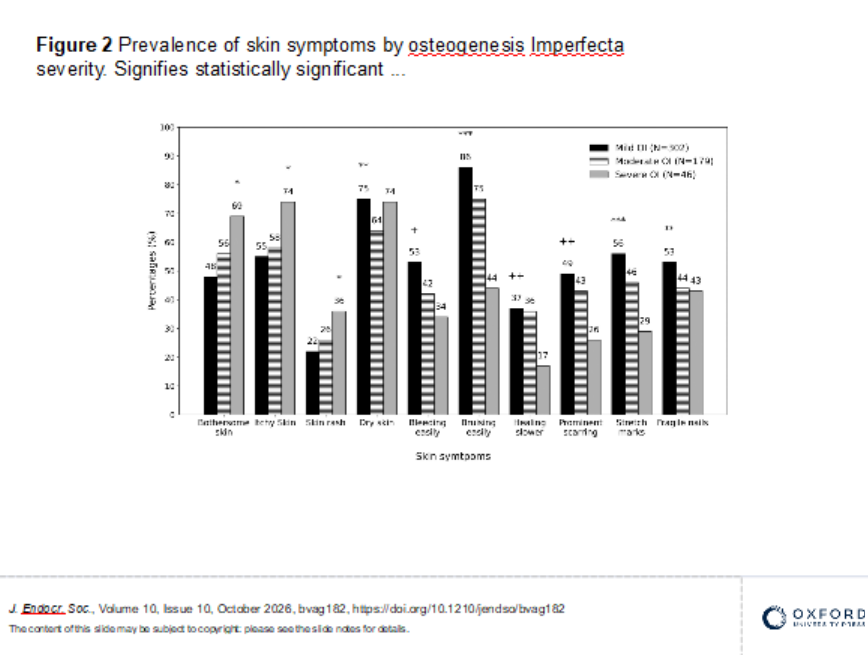
We found that the prevalence of several skin symptoms differed by self-reported OI severity. One potential explanation may be the distinct effects of qualitative vs quantitative defects in type I collagen on skin structure and function. Qualitative collagen abnormalities, which are more typical of severe OI, may disrupt collagen fibril organization and structure. This altered dermal architecture may promote local tissue stress and inflammation, contributing to skin manifestations such as rashes or irritation. The explanation may be further supported by documented cases of Elastosis perforans serpiginosa, which is an inflammatory response to abnormal elastic fibers and are eliminated through the epidermis in patients with OI [9, 17]. In contrast, quantitative collagen defects, more characteristic of milder OI, may lead to reduced skin thickness and increased capillary fragility, resulting in symptoms such as easy bruising and bleeding [14]. Differences in symptom reporting may also reflect variation in symptom perception across OI severity levels. Individuals with more severe OI more frequently reported symptoms that were physically noxious or visually apparent, such as rashes or pruritic lesions. Conversely, respondents with milder OI more often experienced symptoms associated with lower levels of irritation, including easy bruising, dry skin, and fragile nails. It is possible that individuals with severe OI experience multiple concurrent sources of physical discomfort, such as chronic musculoskeletal pain, which may alter the perceived burden or reporting of skin-related symptoms. While no conclusions can be drawn directly from these results, it lays the groundwork for future genotype–phenotype studies.
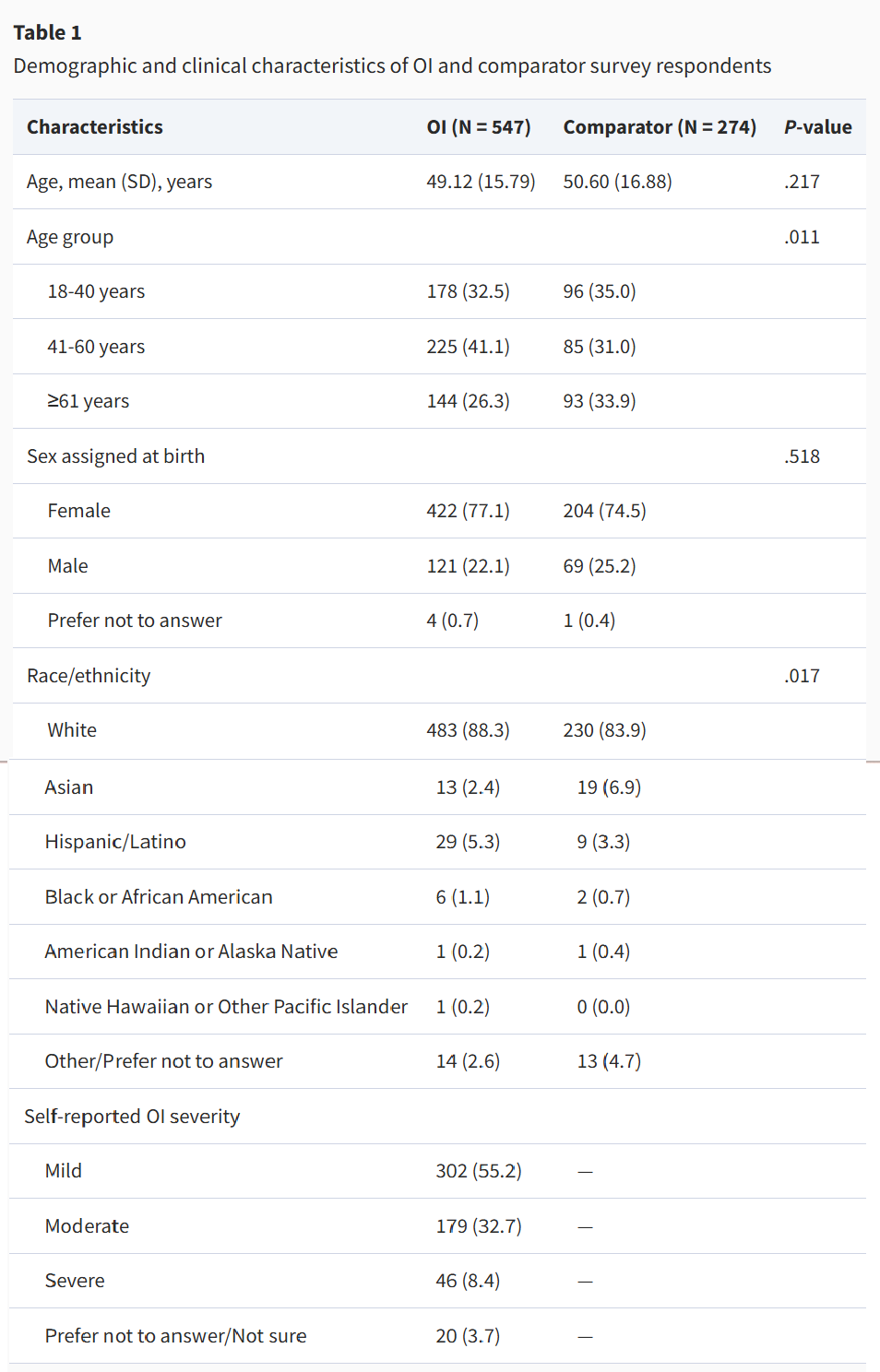
This study has several strengths. We sampled a large and diverse group of adults with OI, spanning the various levels of OI severity. We used a detailed questionnaire to assess a range of skin symptoms and validated patient-reported outcome measures to evaluate the effect of skin symptoms on QOL (ItchyQoL and Skindex-29). These instruments enabled quantitative assessment of both symptom burden and QOL impact. Compared with prior reports, this study offers a comprehensive and focused evaluation of skin symptoms specifically in adults with OI, a population that may experience dermatologic manifestations distinct from those observed in children. A major strength is the inclusion of a simultaneously studied comparator population, allowing contextual interpretation of symptom frequency and impact. Nonetheless, several limitations warrant consideration. The use of a convenience sample from the OI community introduces the potential for selection and response bias, and reliance on self-reported data may be subject to recall bias and subjective interpretation. The use of a convenience sample from the OI community introduces the potential for response bias, and reliance on self-reported data may be subject to recall bias and subjective interpretation. The absence of a formal evaluation of clinical OI type and genotyping precluded genotype–phenotype correlation analyses to determine whether specific collagen mutations differentially affect cutaneous manifestations.
Our sample did not allow us to consider possible racial or cultural differences in skin involvement in OI, and we lacked information about medical comorbidities that may have influenced the prevalence or impact of skin symptoms.
Overall, our findings support skin involvement as a clinically meaningful extra-skeletal manifestation of OI. Although no definite conclusions can be drawn regarding the biological basis for these observations, it may suggest the central role of type I collagen—the primary protein affected in OI—in maintaining dermal structure and function. Abnormal collagen quantity or quality can compromise dermal integrity, elasticity, and wound healing [6, 18], providing a mechanistic explanation for the increased prevalence of skin fragility, bruising, and dryness observed in this and other studies. Further research, including mechanistic studies of ECM biology and detailed clinical characterization of cutaneous phenotypes in OI, is needed to elucidate the underlying pathways of skin involvement. The impact of skin abnormalities on other medical issues (eg, surgical care) warrants more attention. Improved clinical recognition of these manifestations may inform targeted management strategies and ultimately enhance QOL for individuals living with OI.
Funding
This study was supported in part by Osteogenesis imperfecta Foundation (W.L.) and Collins Medical Trust (W.L.).
Disclosures
E.O. consults for Amgen, Angitia, Ultragenyx. O.S. consults for Mereo BioPharma and Amgen. W.L., L.F., A.S., and J.X. have nothing to disclose. S.C. receives royalties for usage of the ItchyQoL by for-profit companies.
Informed patient consent for publication
This study was conducted in accordance with institutional ethical standards and was approved by the Oregon Health and Science University IRB. Electronic informed consent was obtained from all respondents prior to survey participation.
Data availability
Some or all datasets generated during and/or analyzed during the current study are not publicly available but are available from the corresponding author on reasonable request.
Recommended
-
Oliver Semler, Rheumatology, 2024
 Genetic bone and joint disease
Susan Price, Oxford Academic Books, 2018
-
Ronit Marom, European Journal of Endocrinology, 2020
- Effect of Bisphosphonates on the Rapidly Growing Male Murine Skeleton
Eric D. Zhu, Endocrinology, 2014
Citing articles via
New and popular articles
Opportunistic Computed Tomography to Identify Osteoporosis in Primary Hyperparathyroidism Using Sestamibi SPECT/CT Scans
All-cause mortality in people with type 2 diabetes and lipodystrophy-like metabolic phenotype
Germline AIP Variants Are Rare in Sporadic Unselected Pituitary Adenomas